


István Zelenák: The Secret of Tokaji Aszú
Unfortunately history does not provide enough information about the
forming of Tokaj wine region. Hungarian tribes conquered their new
country in 895 travelling from the east, through old wineproducing
areas. They knew how to grow vine in vineyards and they drank wine. Our
first kings invited vine-growing people, the so-called vinitors from
the west and settled them in certain regions. Thus were formed the
royal wine-producing farms, which were taken over by ecclesiastical
landowners after the Mongol Invasion (1241). The monastic orders
contributed a lot to the development of viticulture in Tokaj as well.
In the 14th and 15th centuries foots and slopes of hills were
deforested and brought into cultivation. More and more landowners
started viticulture on their lands.
The western settlers had brought their laws and regulations with
them, which transformed propriety and contributed to the development of
society as well. Vineyards had their own special ownership, tax rules
and land transfer. Traders could not only buy wine and land from noble
landowners, but also from peasants living in market towns. Tokaj wine
as a commodity is first mentioned in 1382.
 In
medieval times Italian wine was transported on the route
Pest-Kosice-Krakow and more and more wine from Hungarian regions joined
this long distance trade. The most famous Hungarian wine was that of
the region “Szerémség” (Syrmia), also mentioned in a book called
Hungaria by Miklós Mohácsi in 1517. Between 1460 and 1526 traders
became more and more interested in wines produced close to northern
markets. Making wine for trade put off the time of vintage until late
autumn. It was in Tokaj wine region that grapes ripening further were
first used after a selected harvest. Paracelsus wrote about noble rot
when visiting Tokaj in 1524, and found this wine excellent, mentioning
it in his books published in 1527 and 1541. Tokaj wine has had a good
reputation in Europe since then. At that time most of the wine
producing regions belonged to the Tokaj manor, in some periods owned by
Habsburg kings of Hungary. Hence the name “Tokaj” wine, used in Vienna.
In
medieval times Italian wine was transported on the route
Pest-Kosice-Krakow and more and more wine from Hungarian regions joined
this long distance trade. The most famous Hungarian wine was that of
the region “Szerémség” (Syrmia), also mentioned in a book called
Hungaria by Miklós Mohácsi in 1517. Between 1460 and 1526 traders
became more and more interested in wines produced close to northern
markets. Making wine for trade put off the time of vintage until late
autumn. It was in Tokaj wine region that grapes ripening further were
first used after a selected harvest. Paracelsus wrote about noble rot
when visiting Tokaj in 1524, and found this wine excellent, mentioning
it in his books published in 1527 and 1541. Tokaj wine has had a good
reputation in Europe since then. At that time most of the wine
producing regions belonged to the Tokaj manor, in some periods owned by
Habsburg kings of Hungary. Hence the name “Tokaj” wine, used in Vienna.
Polish royal court in Krakow and noblemen in Poland preferred
Hungarian wine, by which they meant Tokaj wine. Since they enjoyed
sweet botrytised wines as well, a lot of their gold and silver coins
flowed into the region. From time to time Polish kings had to ban the
import of Tokaj wine, without much result. Traders of Szepes county got
rich and made their towns prosper, and Polish towns collecting taxes
and storing the wine also flourished. National customs policy was
established at both sides of the border.
 Since
Tokaj is situated at the northeast of the country, the region was
frequently ravaged by wars and the castle of Tokaj under siege. This
led to postponing the harvest a lot of times and the late vintage
resulted in botrytised wines. When wine press was widely used besides
grape stomping, the release of juice became more effective. The presses
were owned by urban merchants and noble landowners, so the botrytised
grapes produced by peasants were also bought by urban citizens.
Since
Tokaj is situated at the northeast of the country, the region was
frequently ravaged by wars and the castle of Tokaj under siege. This
led to postponing the harvest a lot of times and the late vintage
resulted in botrytised wines. When wine press was widely used besides
grape stomping, the release of juice became more effective. The presses
were owned by urban merchants and noble landowners, so the botrytised
grapes produced by peasants were also bought by urban citizens.
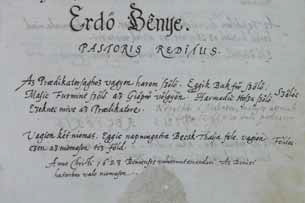
Antal Szirmay (1798) and Iván Balassa (1991), who had and has been
dealing with the history of Tokaj, supposed that botrytised wine was
already made in the region around 1560. The proof was found by István
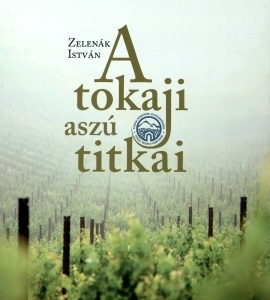
Zelenák – published in his new book: A tokaji aszú titkai (Secrets of
Tokaji Aszú), 2012 – in some court documents of 1571, where “botrytised
wine” was mentioned, saying that the Garay family of Tokaj had 70
barrels and 52 special “aszú” barrels called “átalag” in their cellars,
containing botrytised wine. The Latin-Hungarian dictionary edited by
Balázs Szikszai Fabricius in 1576 also contained the entry vinum
passum, meaning botrytised wine. The last third of the 16th century was
the first period of wine production in Tokaj.
The juice of pressed grapes is only suitable for fermenting wine if
one part of the fruit is unbroken, not raisined grapes. Selecting
botrytised grapes from the harvested fruit became general, as we know
from regulations that forbidthe appropriation of such grapes, e.g. the Article 79 of the1655 Law.
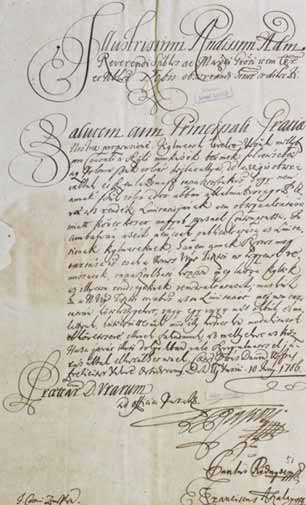
We do not have any written documents about processing botrytised
grapes. The number of “puttonys” (butts or casks) is first mentioned in
1644, when a noble lady living in Krakow asked her relatives in Tokaj
for some four-butt/ four-puttony wine. The still-valid law regulating
the production of botrytised wine was enacted by King Károly III’s
secret rescript of 1737; Tokaji Aszú is made by the 17th-century method
even today.
 In
his new book István Zelenák follows the way of producing Tokaji Aszú up
to the present. In 1945 the Soviet occupation had broken the
development of the Tokaj wine region as well. 1989-1990 meant the end
of the Soviet era in Hungary. The wine produced for the undemanding
Soviet market did not meet the requirements of the world market.
Western taste needed something totally different. The landholding
system also changed: most of the former state and cooperative vineyards
were taken over by western private companies, using modern technology
in producing wine.
In
his new book István Zelenák follows the way of producing Tokaji Aszú up
to the present. In 1945 the Soviet occupation had broken the
development of the Tokaj wine region as well. 1989-1990 meant the end
of the Soviet era in Hungary. The wine produced for the undemanding
Soviet market did not meet the requirements of the world market.
Western taste needed something totally different. The landholding
system also changed: most of the former state and cooperative vineyards
were taken over by western private companies, using modern technology
in producing wine.
The book sums up the traditions worth preserving in the chapter “The
Secrets of Tokaj”. The region has some unique features, such as the
diversity of volcanic soil, which allows the production of special
kinds of extraordinary wines. Another special characteristic is the
specific continental climate with an Indian summer and a lot of
different microclimatic phenomena. With favourable weather conditions
excellent vintage years can be expected.
The outstanding production sites have been formed throughout the millennium, together with a unique condition of cellars. The traditional method of making botrytised wine is accepted by the world market. Human knowledge is integrally related to natural conditions. Tokaj wine region has been part of the World Heritage since 2002.
István Zelenák local historian, Tokaj
Presentation of Haraszthy200 Wine Conference;
5 October 2012, Tokaj.
