


László Bálint: The chemical and aesthetic attributes of the wine
A “one-off” wine
consumer knows two kinds of wine – white and red. Let's face it, the
professionals have a much more complicated task to assign the colour of the
wine, this is not so simple for us.
Chemically the colour of the wine is
determined by the chemical materials founded in the grapes (chlorophyl, xanthophyl,
carotene, flavonoids), the tints stored in the skin of the berries which are
formed under the third and fourth cell row under the skin tissue, and the
chemical reactions during the fermentation and ageing. The fermentation and
ageing process is so complex that the wine is frequently called the king of
tinctures.
During the tasting of the wine, firstly we analyse the colour of the
wine, and its behaviour in the glass. This time we got a lot of information,
which we add to those observed on the nose and on the palate.
In accordance
with international standards (WSET – Wine and Spirit Education Trust), we have
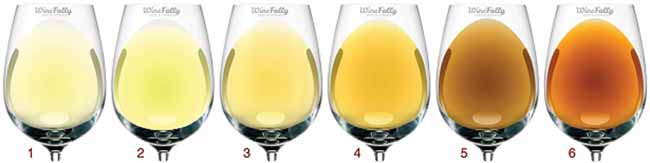
the following colour guidance. White wines: lemon-green – lemon – gold –amber –
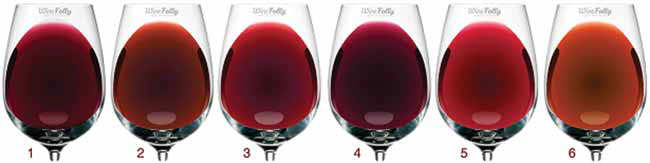
brown. Rosé wines: pink – salmon – orange – onion skin. Red wines: purple –
ruby – garnet – tawny – brown.
 In fact the situation is more complicated, the
wines cannot be compartmentalised unequivocally, and the colour of the wine can
vary in the glass. The core of the wine should be deeper, occasionally opaque,
the rim could be little bit lighter in colour, sometimes watery, or with
different colour hints. The legs can tone the wall of the glass, and the
consistency of the wine uncovers the style. Finally the colour of the wine
depends of the lighting of environment.
In fact the situation is more complicated, the
wines cannot be compartmentalised unequivocally, and the colour of the wine can
vary in the glass. The core of the wine should be deeper, occasionally opaque,
the rim could be little bit lighter in colour, sometimes watery, or with
different colour hints. The legs can tone the wall of the glass, and the
consistency of the wine uncovers the style. Finally the colour of the wine
depends of the lighting of environment.
A young, reductive-made wine is
lemon-green, with white watery rim, thin, not adhering legs. We can discover
these colours in an aromatic Cserszegi Fűszeres, or in an Irsai Olivér, both
trendy-wines nowadays.
In case of a Tokaji-wine, dry or aszú, usually a ripen
yellow colour dominates, or a deep gold, or in a case of an aged wine the
colour can be amber, brown. This is natural! When they born, these wines were
greenish yellow too. But during the fermentation and the long ageing period,
which belongs to this wine region, the greenish component is oxidising firstly
to yellow, and by time to amber, sometimes to deep brown.
 The colour-chang of
red wines is interesting too. A young red is mainly purple, rich in violet and
blue. During the ripening they will lose the blue component and the main colour
will be ruby. The orange or tawny rim is forming only after 7–8 years of
ageing, the brown core will appear after decades.
The colour-chang of
red wines is interesting too. A young red is mainly purple, rich in violet and
blue. During the ripening they will lose the blue component and the main colour
will be ruby. The orange or tawny rim is forming only after 7–8 years of
ageing, the brown core will appear after decades.
Reaching these colours is the art of fine wine making, because a good wine is not only a product, it is a creation.
László Bálint viticulturist, sommelier, Eger AIWS
Presentation of Haraszthy200 Wine Conference;
5 October 2012, Tokaj.
